
Avoiding Apple's 30% Fee Through Strategic Design
Redesigned a fintech app's subscription flow to maintain profitability while meeting App Store compliance requirements in 3 weeks.
Context
A fintech startup's money-saving app was rejected by Apple for non-compliance with in-app purchase rules. The team had already built their payment system around Apple Pay, but paying the mandatory 30% commission would eliminate profit margins.
UX/UI Designer
3 weeks
The Challenge
Apple rejected the app for in-app purchase policy violations. The 30% commission would eliminate profit margins, but direct links to web payments would trigger another rejection.
Key Constraints:
- 3-week timeline to resolve and resubmit
- Existing Apple Pay infrastructure already built
- Needed compliant solution while maintaining low-friction UX
The Approach
Discovery & Research
I researched how major platforms handled Apple's restrictions and studied App Store review guidelines line-by-line.
Key findings:
- Spotify, Netflix, and Amazon all used web-based payment flows
- Apple prohibited direct links to subscription pages
- Apple allowed links to general website areas
- This "general link" allowance became our core strategy
Design Strategy
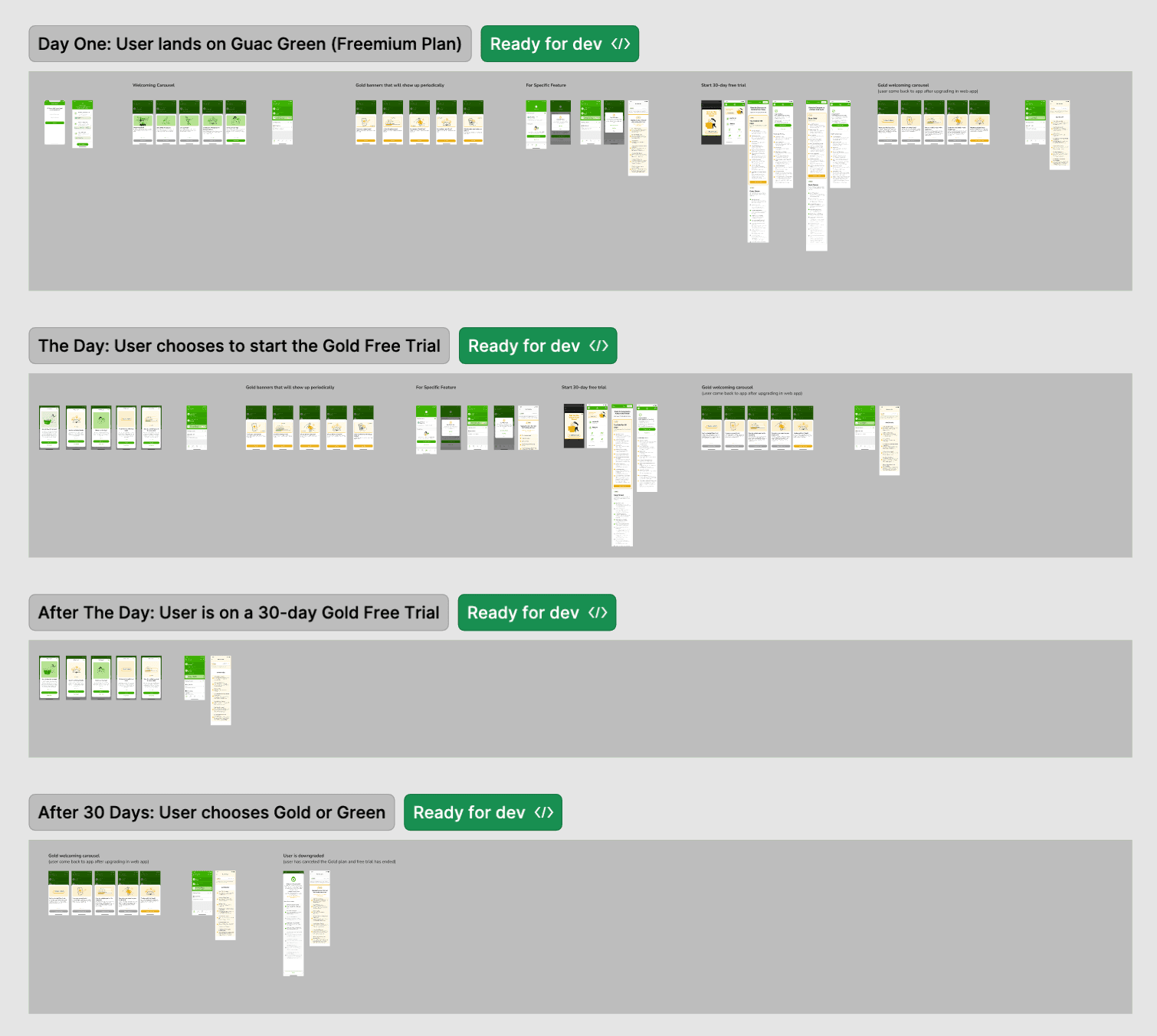
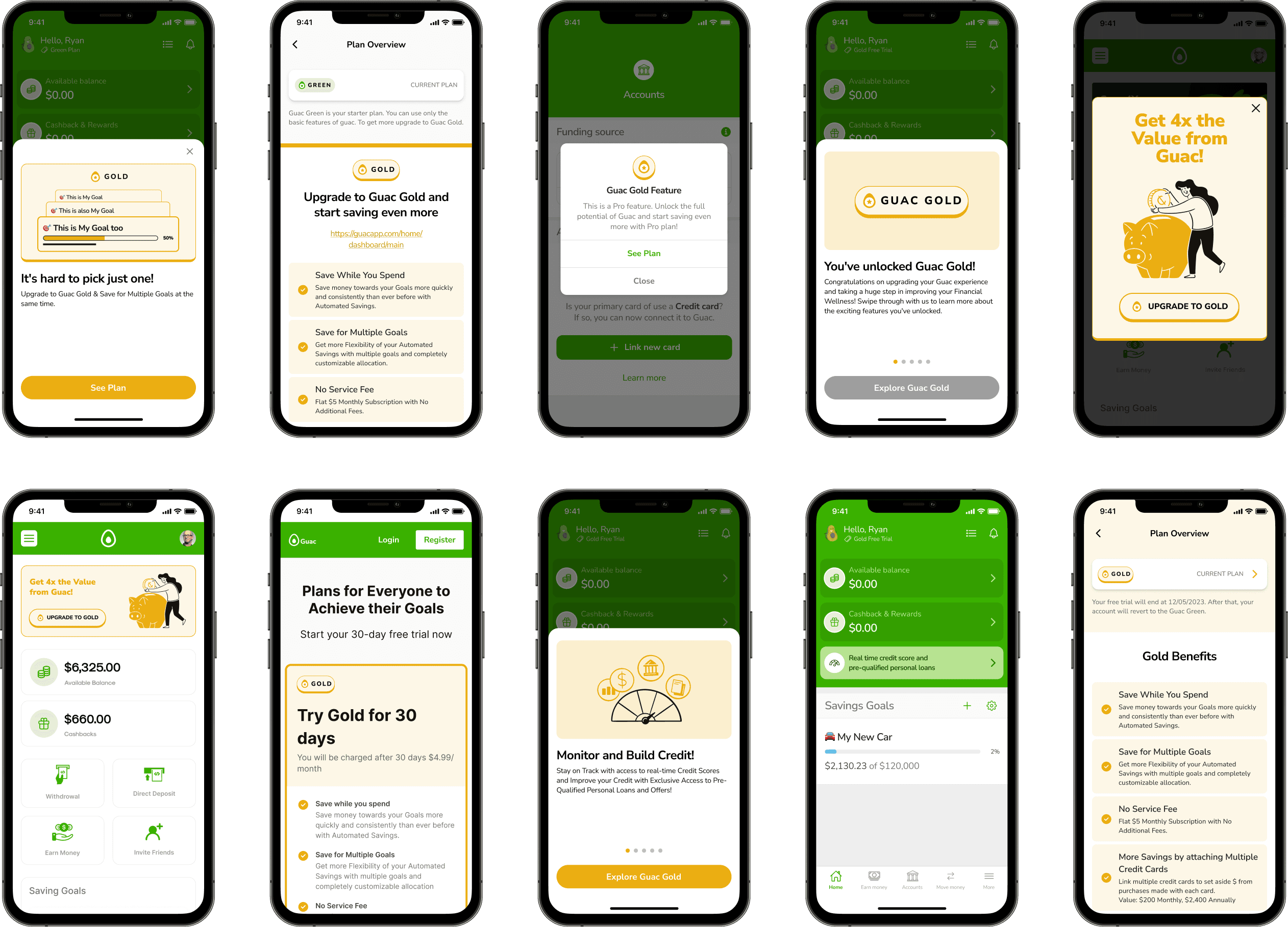
Created a "Homepage Bridge" approach to stay compliant while maintaining conversions:
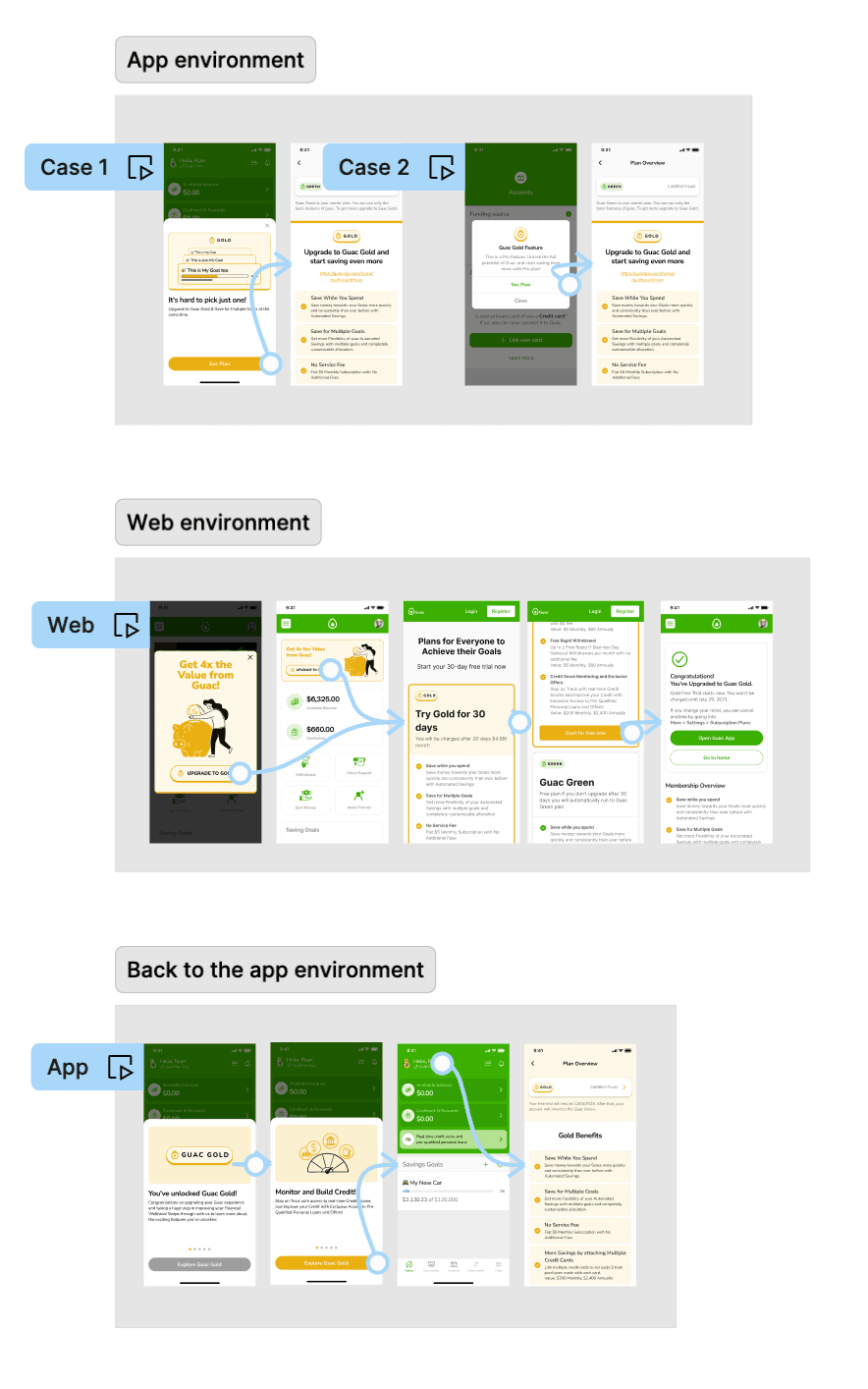
- In-app CTAs link to the homepage (allowed by Apple)
- Web redirects guide users from homepage to subscription pages
- "Golden Rules" design guidelines established:
- No words like "upgrade" or "subscribe" in buttons
- No pricing displayed in-app
- No direct subscription CTAs
- Use "Learn More" and "Visit Website" language instead
Technical Implementation
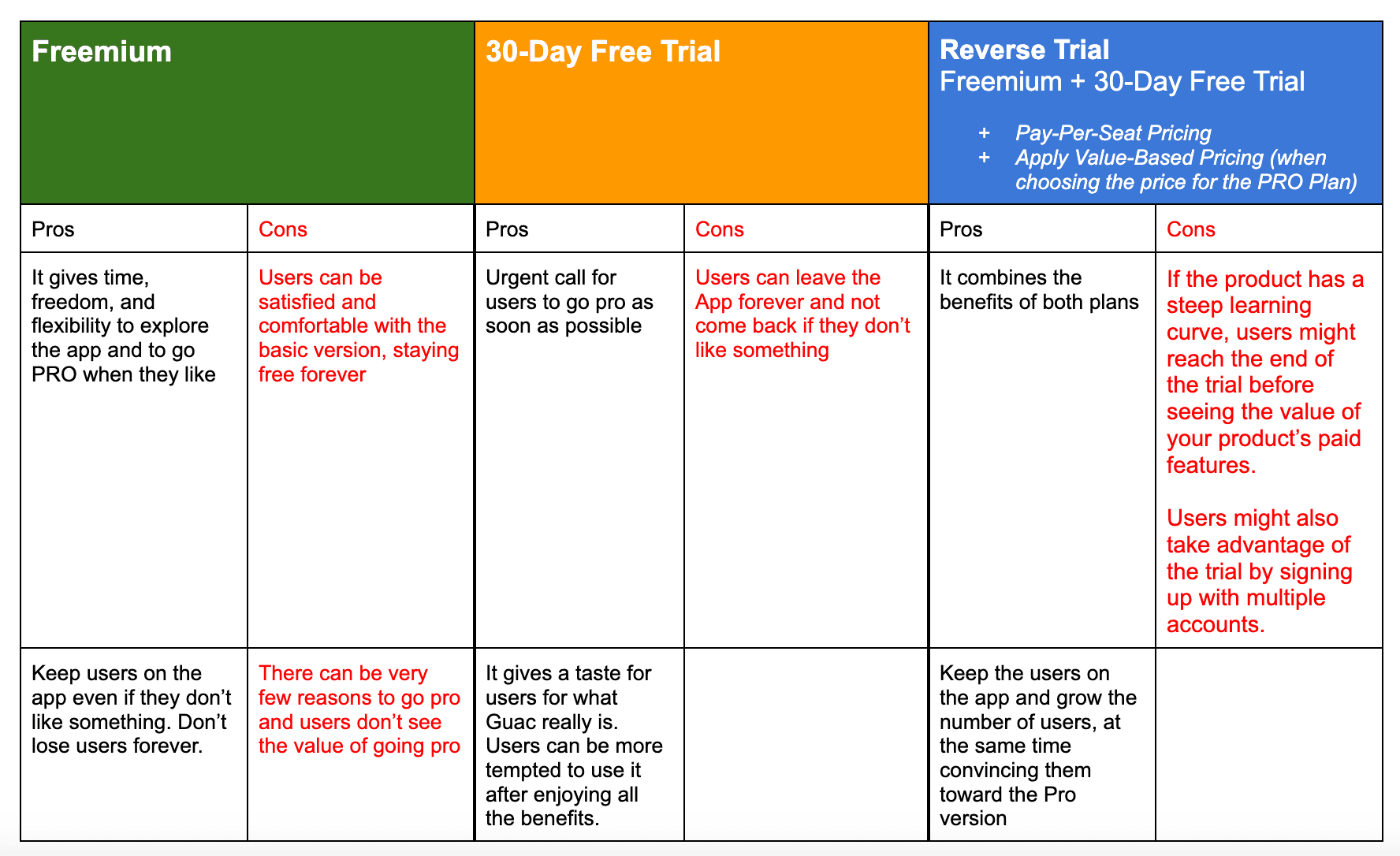
Built a hybrid model to offset the increased payment friction:
- Freemium + 30-day free trial gave users time to experience value before payment
- Conditional UI logic showed different CTAs based on user state
- Fallback flows designed for abandoned subscriptions
- Progressive disclosure showed just enough value to motivate conversion
Key Decisions
Homepage Bridge over Direct Links
Used Apple's 'general informational link' allowance to create a legal pathway from app to subscription through the homepage, avoiding automatic rejection while maintaining reasonable conversion paths
Freemium + Free Trial Hybrid
Combined both models to offset the increased friction of web-based payments—users had 30 days to experience premium value before deciding to navigate the external payment flow
Negative Space Design Language
Deliberately avoided banned words ('subscribe,' 'upgrade,' 'unlock') and created new conversion language focused on 'learn more' and 'visit website' that satisfied reviewers while still driving conversions
Progressive Disclosure Strategy
Showed users just enough value in-app to motivate web conversion without displaying pricing or subscription details that would trigger rejection
The Results
- 0% commission paid to Apple — maintained profitability on all subscription revenue
- First submission acceptance — no resubmission delays, launched on schedule
- Maintained conversion rates — users successfully subscribed despite longer web-based journey thanks to free trial period
- Reusable compliance framework — "Golden Rules" became company standard for all App Store submissions
- Modular payment architecture — new design allowed easy A/B testing of different conversion flows
- 70% faster legal review — detailed compliance guidelines reduced legal review time for future features
Reflections
What Worked Well
- Competitive research revealed the 'general link' loophole that became our core strategy
- Working within constraints rather than fighting rules satisfied both compliance and business needs
- Daily syncs with legal, engineering, and business teams kept everyone aligned
What Could Improve
- Earlier legal consultation would have caught edge cases faster
- More user testing (validated with 5 users, should have been 10-15)
Key Takeaway
UX design isn't just about user experience—understanding business economics and platform rules is equally important when your design decisions directly impact profitability.